Prison Puppies FAQs

By Melissa Spooner, LVT, coordinator of Prison Puppies
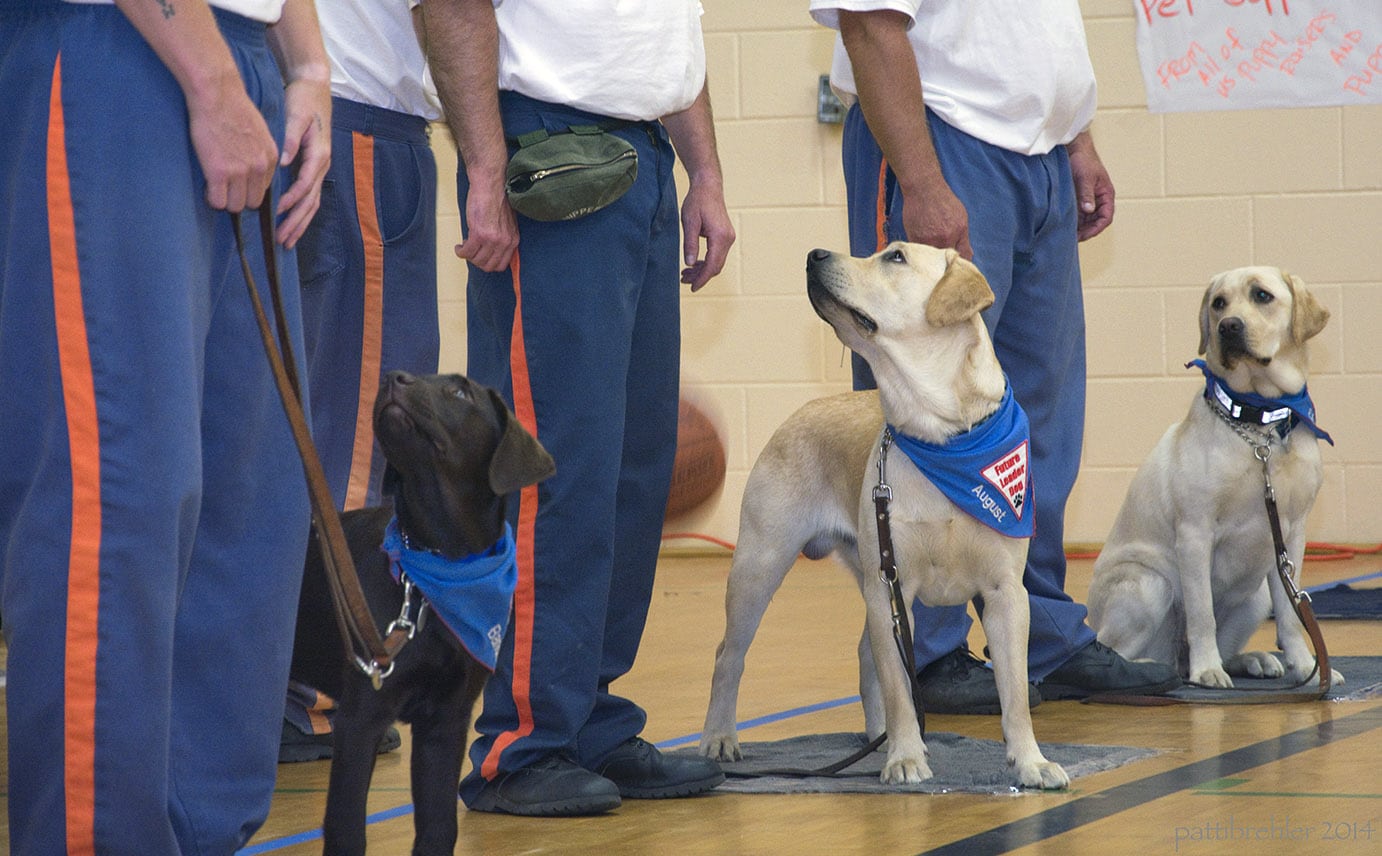
Prison Puppies allows inmates to raise guide dog candidates for Leader Dogs for the Blind. Prison Puppies has proven to be a win, win, win initiative with inmates developing responsibility and positive personal skills, Leader Dogs for the Blind having a pipeline of well-trained dogs primed to begin their formal instruction and Leader Dog clients receiving exceptional canine partners who help them live more independent and fulfilling lives. Here are some frequently asked questions about Prison Puppies:
Q: Who decides which inmates get the puppies?
A: In most cases the decision is made by the correctional facility liaison (employed by the facility) who spends a portion of their time overseeing Prison Puppies. Inmates who are interested in raising a puppy start by completing an application, which may include writing an essay or completing other assignments. Only those inmates who have exemplary behavior while incarcerated are eligible to participate.
Q: Who names puppies raised in prisons?
A: We encourage each puppy raiser or team of puppy raisers to name their assigned puppy. This is part of the fun of puppy raising and it helps create a strong bond between the puppy and the raiser.
Q: How long are the puppies with their raisers?
A: The commitment to puppy raising inside of a correctional facility is no different than raising a puppy in a family home. Raisers spend 24 hours per day, 7 days a week for approximately one year raising their Future Leader Dog. This is a full-time volunteer position.
Q: How do they go for walks or play?
A: Around each facility are walking paths, lawns, gardens and fenced play yards. The inmate raisers are pre-scheduled to have playtime a few times per week with other puppies in one of the fenced play yards. At any point when the prisoner can walk freely around the facility, they can have the puppy they are raising with them too.
Q: How do the inmates learn how to train their puppies?
A: Much like puppy raisers outside of prison, inmate raisers have a puppy counselor who they visit with 1–2 times per month. The only difference is that the counselor comes to them. The inmate raisers are supplied with our puppy manual and also have books in their library. Often the puppy counselor supplies them with additional forms of educational material such as articles or printouts.
Q: How can the puppies be successful if they don’t gain the social aspect of going to stores, being around traffic, riding in cars (or on a bus, train, plane, etc.) and other things that outside puppies are exposed to?
A: Most correctional facilities are set up like college campuses or small cities. The facilities offer many situations and scenarios that puppies would encounter in public including stairs, different footing surfaces, elevators, a variety of noises, traffic from delivery trucks and small recreational vehicles, crowds, adults and children visiting, squirrels, etc.
Q: How well does a puppy raised in a prison adjust to life on the outside?
A: Very well. There are virtually no special requirements needed to help them adjust.
Learn more about Prison Puppies.
Ready to Learn, Support, or Make a Difference?
-
Apply to a Program
Learn the skills for safe, independent travel and lead a life without limits — all at no cost.
-
Donate
Since we receive zero government funding or insurance money, we rely 100% on the generosity of donors like you.
-
Volunteer
Every day, we rely on the support from our community of volunteers, made up of people just like you who make our mission possible.
Join Us For Dinner in the Dark!
Presented by AAA The Auto Club Group - March 20, 2026
Our signature fundraiser will take place at the Palazzo Grande in Shelby Township, MI. Every dollar raised supports life-changing programs at no cost to our clients, empowering people who are blind or low vision to live independent, confident lives.
The evening includes a family style dinner, an open bar, hors d'oeuvres, an ice cream and cannoli platter, an espresso station, and on-location parking.

A New Issue of the Faithful Friends Newsletter Is Out!
In our latest Faithful Friends newsletter, we highlight ways we are helping Leader Dog clients — and we invite you to learn how you can make a difference.