What is Orientation and Mobility Instruction?
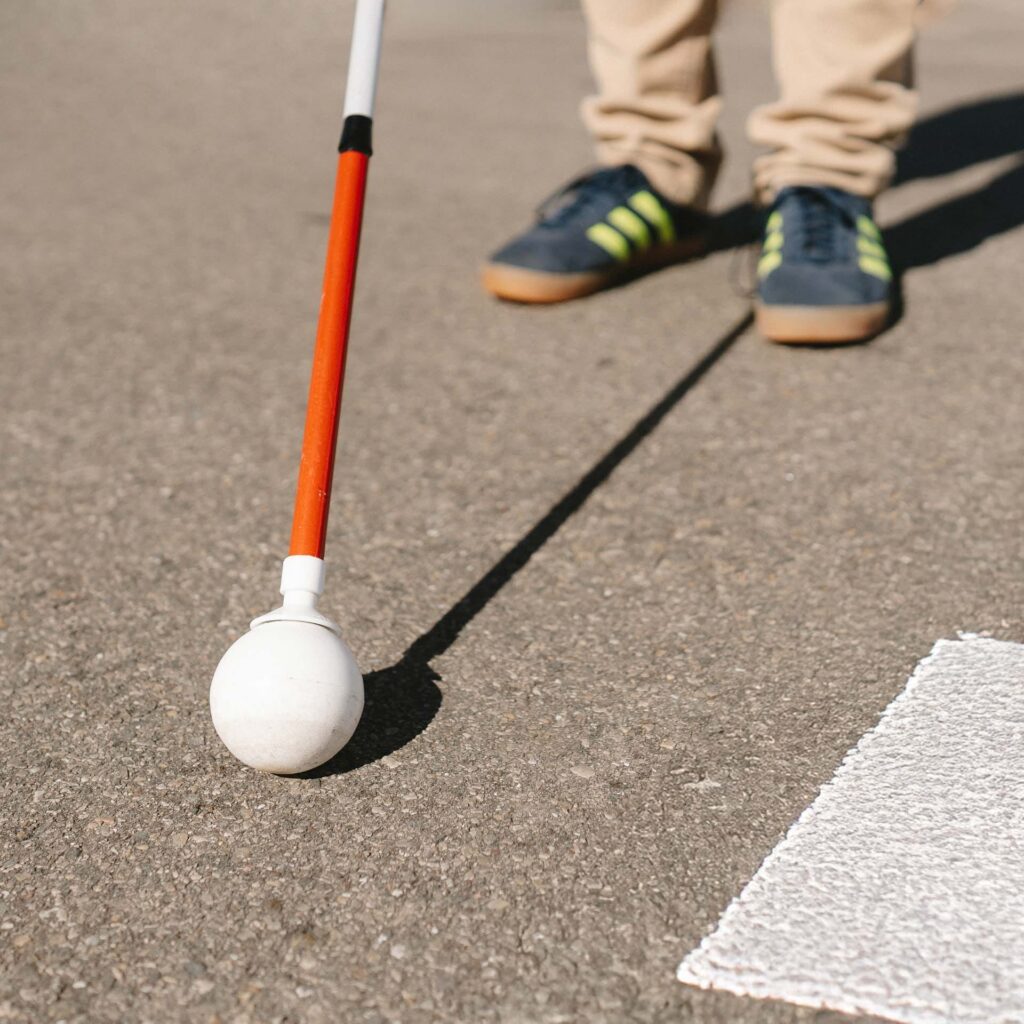
For the nearly 20 million people in the US living with blindness or low vision, orientation and mobility (O&M) instruction provides vital skills to help them live safely, confidently and independently.
Orientation and mobility instruction is tailored to each person’s unique needs and circumstances—including the degree of vision loss, personal goals and abilities. Orientation and mobility training is often an essential part of vision rehabilitation for people of all ages with vision loss.
Orientation and mobility instruction is conducted by highly trained vision rehabilitation specialists called certified orientation and mobility specialists (COMS). Instruction occurs in various environments the client frequents, including home, school, work and community. Instruction helps adults living with blindness and low vision navigate their environment, including these key areas:
- Orientation: Teaches people living with vision loss how to recognize, map and gain a greater understanding of where they are in their at all times in home, work and community environments.
- Environmental and spatial awareness: Helps people living with blindness or low vision to navigate safely within a variety of spaces — home, work, other indoor spaces and a broad range of outdoor environments, including streets, sidewalks and crosswalks, public transportation, buildings, stores, parks and more.
- Mobility: Teaches how to travel from one location to another safely in real-life settings for maximum impact. Mobility instruction often includes white cane training. Once orientation and mobility instruction concludes, some may wish to receive additional support from a dog guide, which requires added instruction.
- Assistive technology: An increasing array of technology is available to assist people living with blindness and low vision. Technology aids in orientation and mobility and continued navigation through varying environments. Some examples include smartphone apps, including GPS-based ones that deliver audible messages, talking GPS, and electronic travel aids that provide auditory cues or vibrations. More apps are also being enhanced with AI technology for a more comprehensive and personalized experience.
Orientation and mobility skills provide people living with vision loss greater control of their daily lives, reducing reliance on others, restoring self-confidence, and improving safety and quality of life.
Orientation and mobility at home can extend to creating a safe and accessible space. Adults living with blindness and low vision are at an increased risk of falls, the leading cause of injury among older adults. According to information from the Centers for Disease Control and Prevention (CDC), more than one in four Americans aged 65 and older experience a fall each year. Vision impairment more than doubles this risk. In addition to learning how to safely move throughout the home, decluttering and removing trip hazards, including area rugs and electrical cords, is also crucial. Safety can be enhanced through optimized (and consistent) furniture arrangements, appropriate lighting, textured surfaces, and contrast. Utilizing a labeling system with braille, textures or audio labels can further reduce accidents and injury is an important part of living skills training.
Orientation and Mobility at Work! Despite the recent increases in remote/at-home employment opportunities, many people living with blindness or low vision still travel to work offices and facilities each day. Orientation and mobility instruction often includes on-site training to help one safely and efficiently navigate their work environment.
Orientation and mobility skills help reframe the future for people living with blindness and low vision by increasing independence, improving safety, and enhancing quality of life.
Written by VisionServe Alliance.
Ready to Learn, Support, or Make a Difference?
-
Apply to a Program
Learn the skills for safe, independent travel and lead a life without limits — all at no cost.
-
Donate
Since we receive zero government funding or insurance money, we rely 100% on the generosity of donors like you.
-
Volunteer
Every day, we rely on the support from our community of volunteers, made up of people just like you who make our mission possible.
LAST CHANCE to take advantage of our Matching Gift Challenge
Support our $60,000 Matching Gift Challenge and have your gift DOUBLED!
Join Us For Dinner in the Dark!
Presented by AAA The Auto Club Group - March 20, 2026
Our signature fundraiser will take place at the Palazzo Grande in Shelby Township, MI. Every dollar raised supports life-changing programs at no cost to our clients, empowering people who are blind or low vision to live independent, confident lives.
The evening includes a family style dinner, an open bar, hors d'oeuvres, an ice cream and cannoli platter, an espresso station, and on-location parking.

A New Issue of the Faithful Friends Newsletter Is Out!
In our latest Faithful Friends newsletter, we highlight ways we are helping Leader Dog clients — and we invite you to learn how you can make a difference.