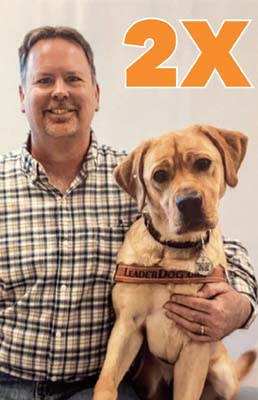
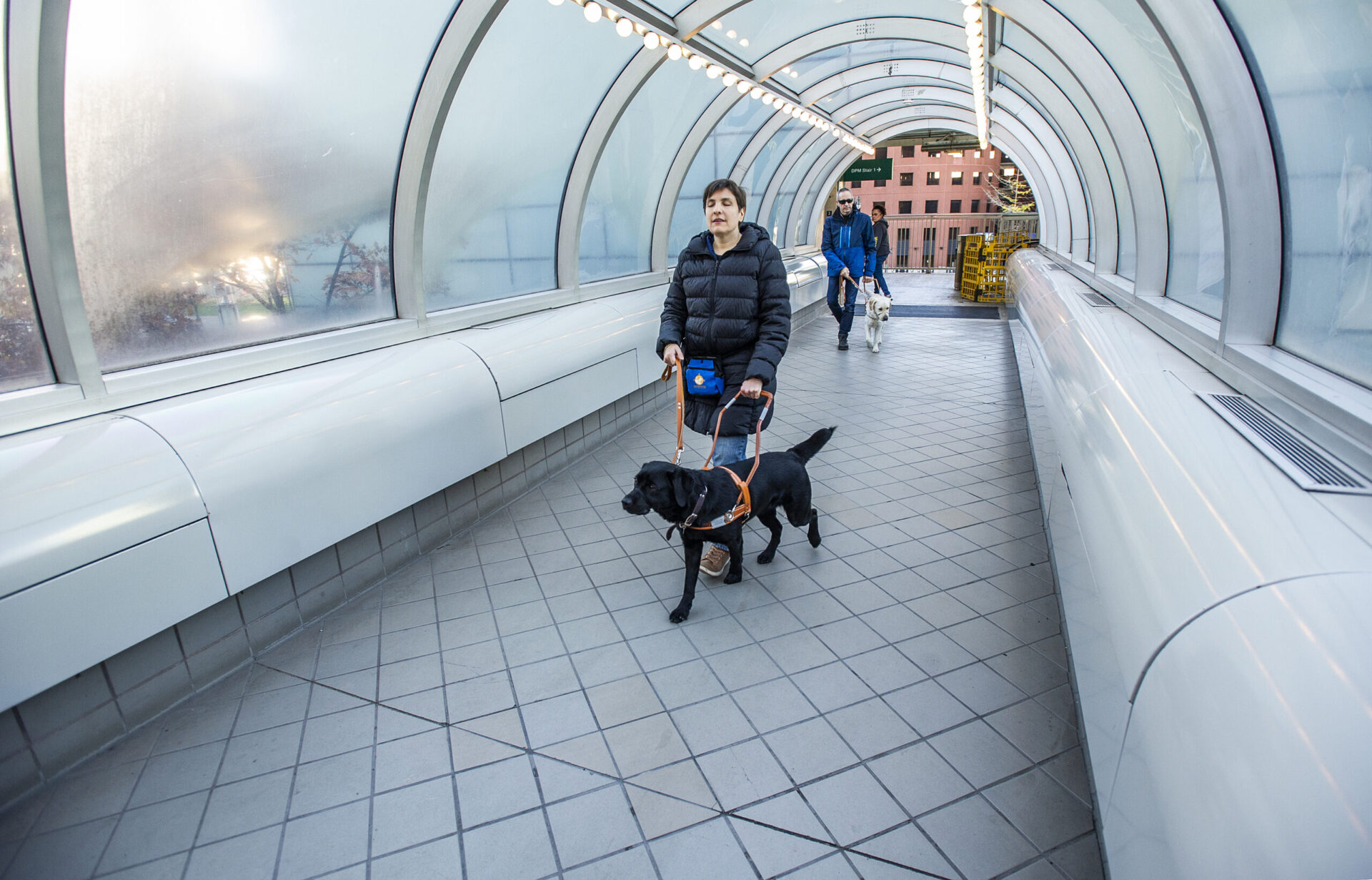
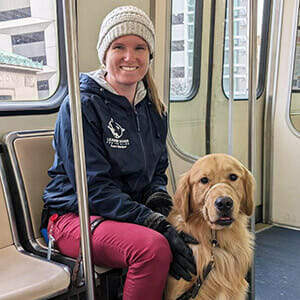
Having a Leader Dog makes traveling easier, going from place to place is more efficient. The dog's doing what it's trained to do while I get to look around and take in whatever I can still see.
Since 1939, Leader Dogs for the Blind has helped thousands of people unlock greater confidence and independence through one of the world’s most respected and innovative guide dog programs. Our program is offered at no cost to clients. Be matched with a highly trained Leader Dog and receive personalized instruction that fits your life, goals and way of learning.
Having a Leader Dog makes traveling easier, going from place to place is more efficient. The dog's doing what it's trained to do while I get to look around and take in whatever I can still see.
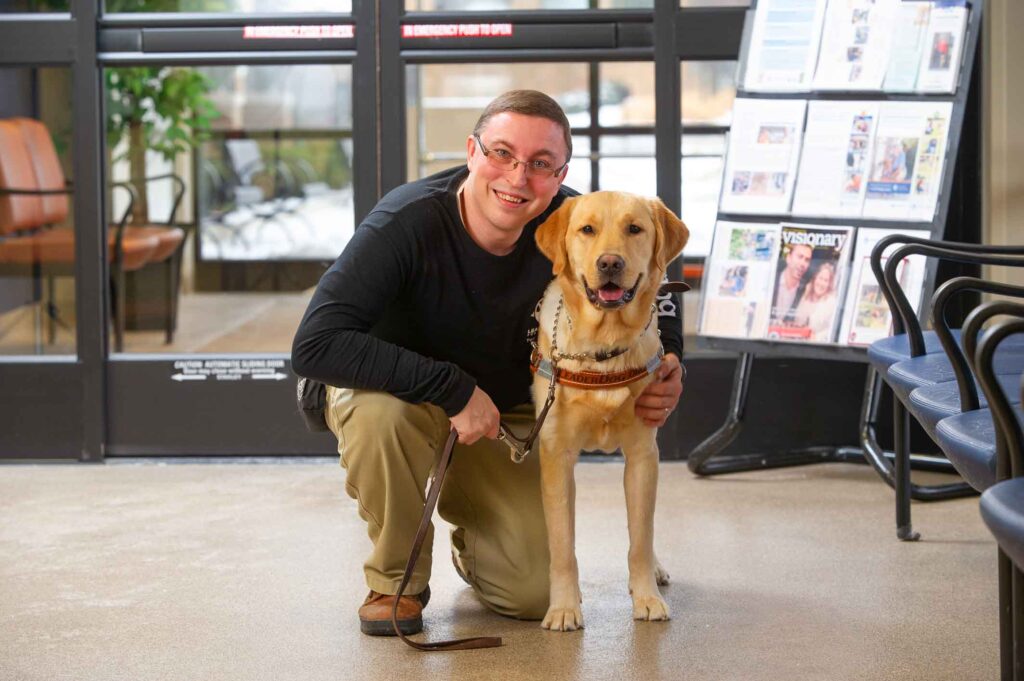
Being with Leader Dog Spike will give me the freedom to do what I want to do by myself. Go to the store without having to have someone with me. I feel like he gives me more freedom and comfort.
I find that I'm much more active when I have a dog. I feel like I can go out and talk to the public more. I feel much more confident when I have a dog.
Instruction will be individualized based on your lifestyle and needs, as well as your guide dog’s needs. With this approach, you can learn at a pace that feels right for you, ultimately reaching a level that empowers both you and your Leader Dog to travel safely and independently together.
Leader Dog offers personalized services for people who are blind and have additional physical or cognitive needs, such as cerebral palsy, traumatic brain injuries, balance concerns, or auditory limitations. All instruction can be communicated in Spanish to residents of the U.S., Canada or Mexico, or using American Sign Language (ASL), either visual or tactile, if a client is DeafBlind.
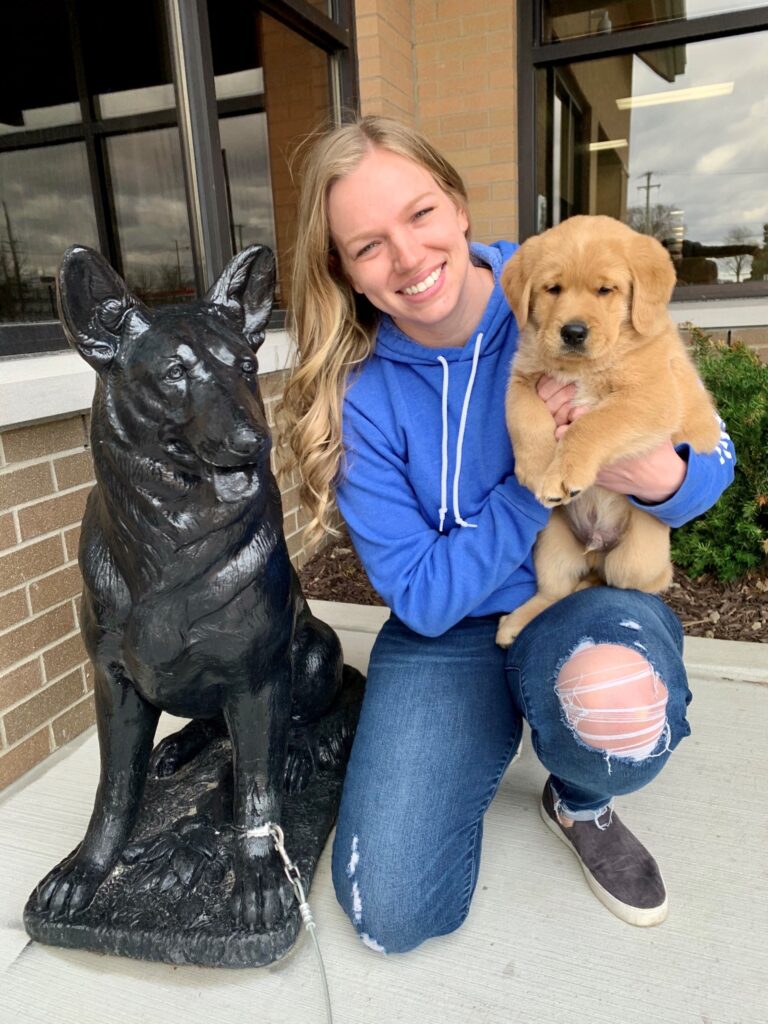
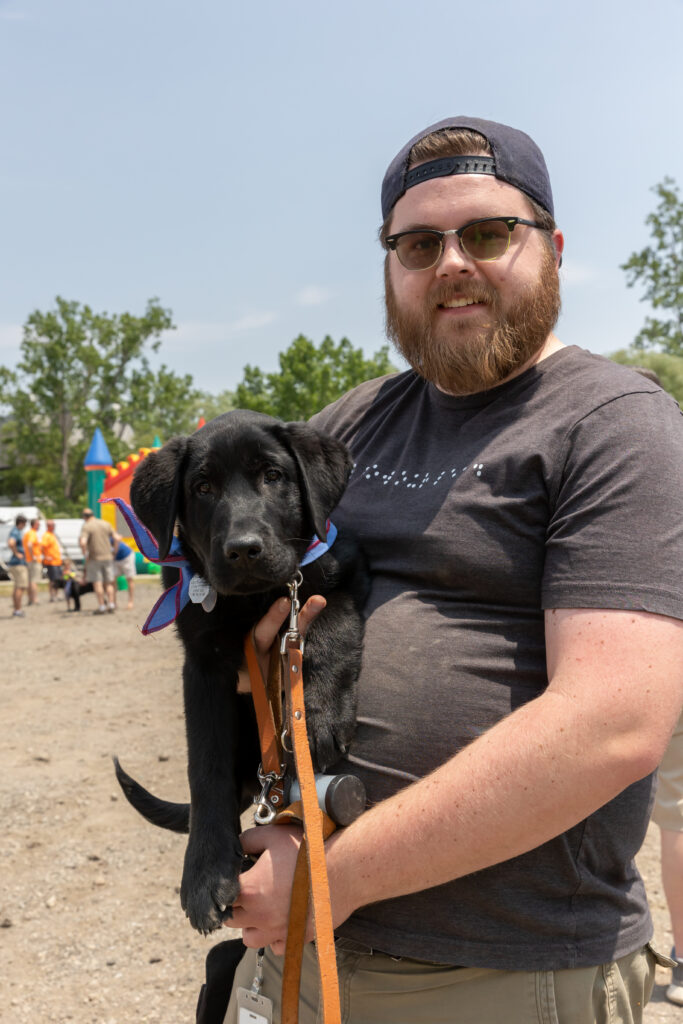
Thanks to our breeding, puppy raising and guide dog training programs, we are able to match clients with a guide dog that best fits your lifestyle, travel pace, physical size, stamina and other considerations. Our Leader Dogs have been trained by volunteers since birth before entering official guide dog training for four to six months.
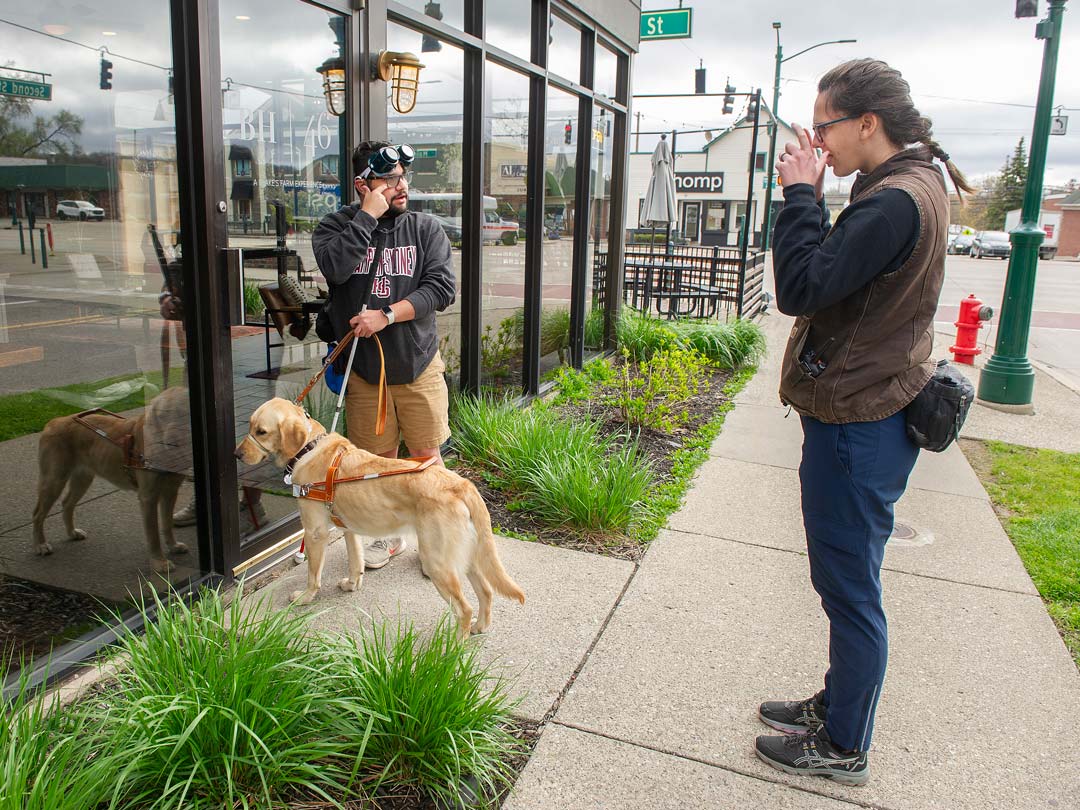
Your instruction is led by a guide dog mobility instructor (GDMI) who will prepare you to become a guide dog handler, teaching you the specialized cues, routines, care, enrichment and welfare of your Leader Dog. To fit your current and future needs, you will train with your guide dog in a wide variety of environments, which might include urban, suburban or rural locations; college campuses; busy stores and malls; public transit and other environments.
We offer flexible scheduling and in-home support to fit your needs. When you apply, let us know your goals and we’ll match you with the option that best fits.
This three-week program occurs on Leader Dog’s campus where you’ll receive instruction away from daily distractions to build a strong bond with your new guide dog. You will meet other guide dog clients, engaging with people in the blind and low vision community with shared experiences.
A guide dog mobility instructor (GDMI) travels to your home environment to provide one-on-one, tailored instruction. This instruction lasts a minimum of 10 days.
This option combines the benefits of both on-campus instruction and in-home delivery for maximum flexibility. It also provides a solid foundation, allows for personal follow-up in your home environment and enables you to gain experience with your guide dog in both family and work situations.
Leader Dog will be with you every step of the way, from application to graduation and beyond.
Your instruction starts Monday morning when you meet your instructor. These first few sessions with your GDMI are what we refer to as Juno instruction. This is a time to learn about the equipment, practice the basic guide dog cues and more. Then, you’ll meet your dog on Wednesday morning.
During the second week, you will practice more independent travel by learning to work with your dog to navigate indoor areas, such as stores and malls, as well as by visiting nearby cities to navigate outdoor settings.
In the third week, you will have more independent routes to practice the skills you have recently learned. You will also visit environments that are like your home area so that you and your Leader Dog feel confident in more familiar settings. Additionally, we will go over what to expect when you bring your Leader Dog home, along with ways to support them as they adjust to their new environment.
To help give you and your family peace of mind, Leader Dogs for the Blind coordinates and covers the cost of all public transportation to and from our campus. This is done for clients who are traveling within the United States, Mexico and Canada.
When you arrive on campus, one of our team members will take you on a welcoming tour of the Polk Residence Center so that you can become familiar with the space right away. During this time, we encourage you to ask questions about our campus, your upcoming instruction and what will happen in the days ahead.
Program instruction takes place from Monday through Saturday. You will have free time in the evenings and on Sundays to spend however you’d like. In the evenings, various activities will be provided by our residence services team if you wish to join.
Your daily schedule might look like this:
Your private room has everything you need to feel right at home: your own bathroom, full-size bed, desk and chair, small refrigerator, television, internet access, dog bed, temperature controls and direct access to a secure outdoor area. Some rooms are equipped with additional adaptive equipment.
We provide breakfast, lunch and dinner in our dining room, and a self-serve snack station in our Residence Assistance Office — all at no cost. If you follow a special diet or have any allergies or restrictions, we’ll make arrangements to meet your needs.
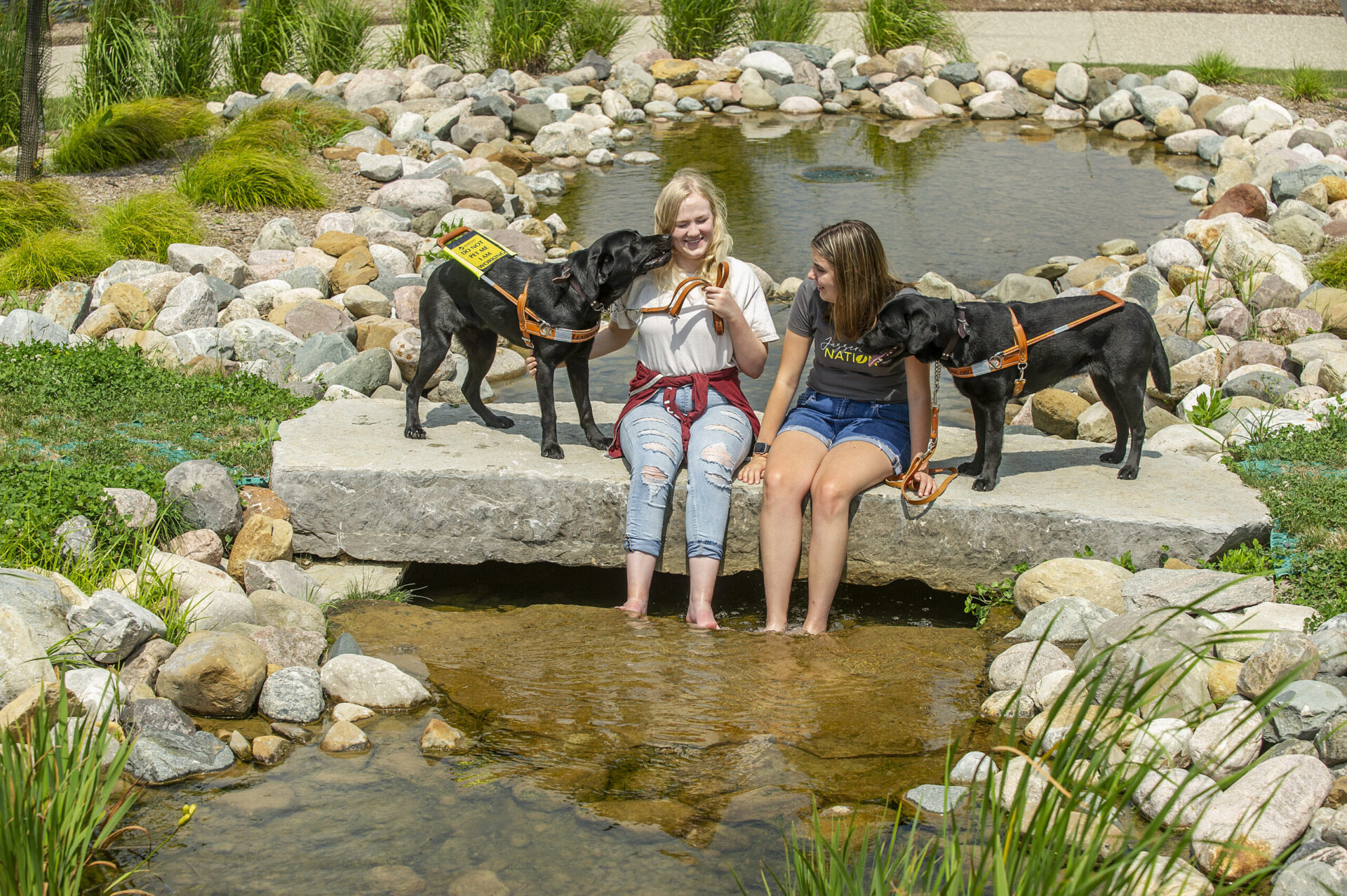
In addition to the group session offered while attending the program, our client support and wellness specialist hosts monthly virtual group support calls and offers one-to-one meetings.
The monthly virtual, peer support sessions for Leader Dog alumni are designed to:
Our virtual learning opportunities are designed for everyone, whether you’re considering applying for services, already enrolled, an alumni, a family member or friend of someone who is blind or low vision, or a professional in the field. Take advantage of these resources to stay informed and connected!
Coming to Leader Dog for a new guide dog may be a difficult and emotional time for some clients. That’s why our psychosocial support manager facilitates group transition and grief sessions for returning clients who may find extra support helpful during the first days on campus.
Bringing a guide dog into your life creates a meaningful, long-term partnership. With that comes our promise of ongoing support, continuing long after graduation. For example, our team provide in-home visits, follow-up instruction, periodic check-ins and annual wellness calls, ensuring you and your guide dog continue to thrive together.
We’re here to help. Contact our client services team with any questions about eligibility, travel or program details.
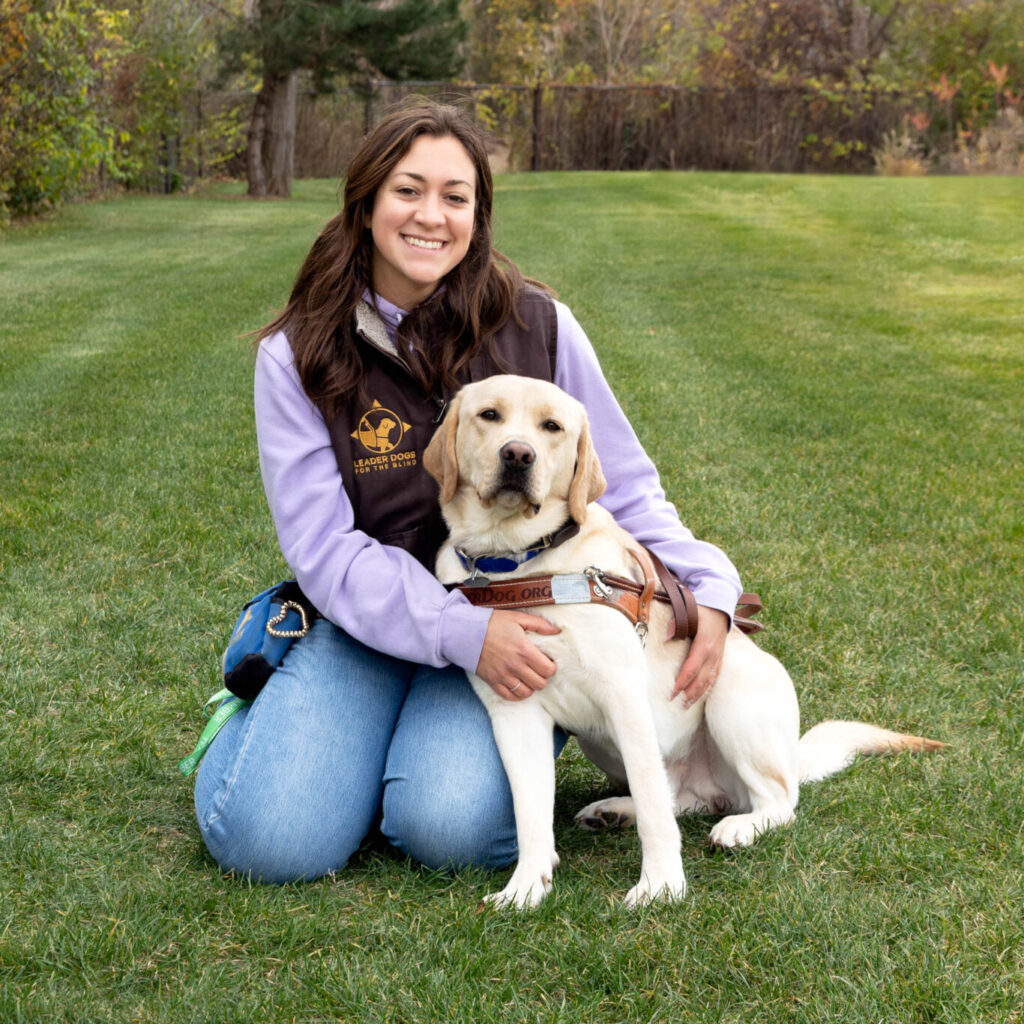
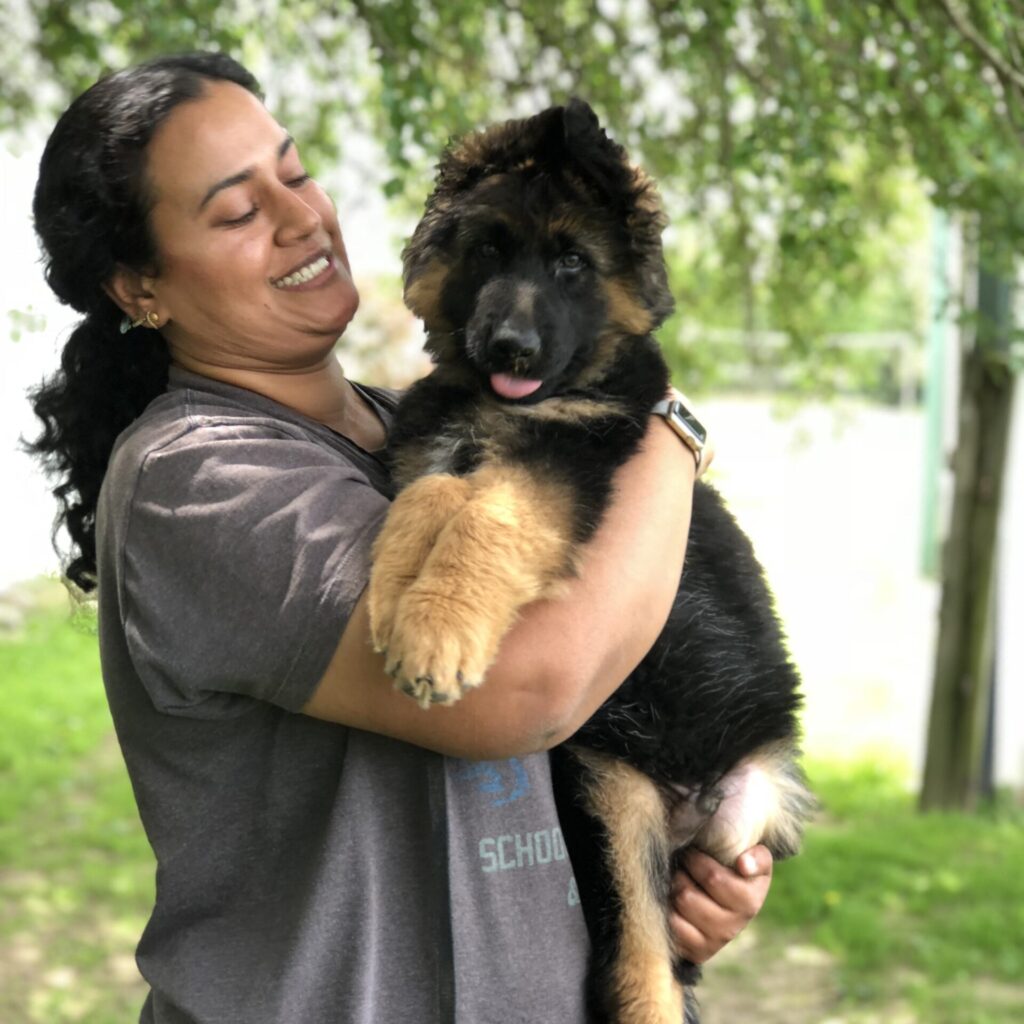

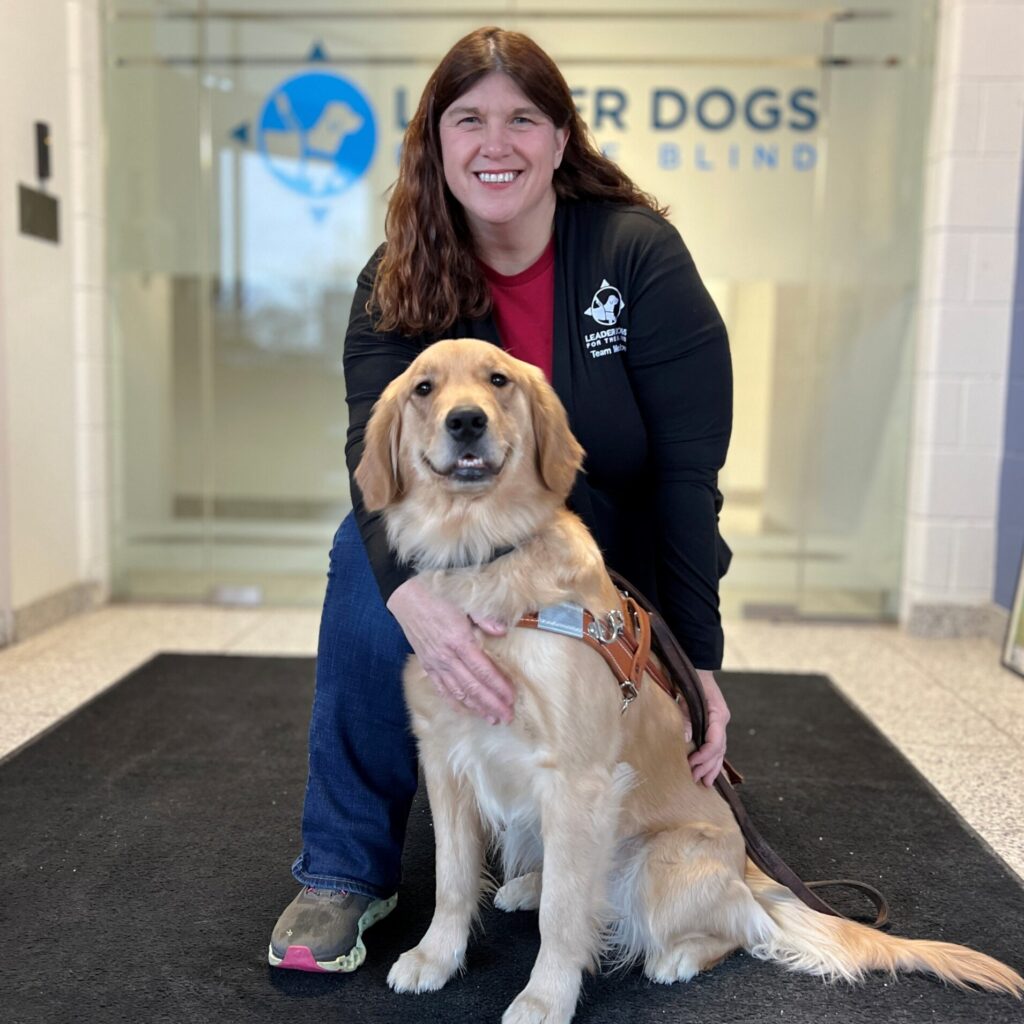
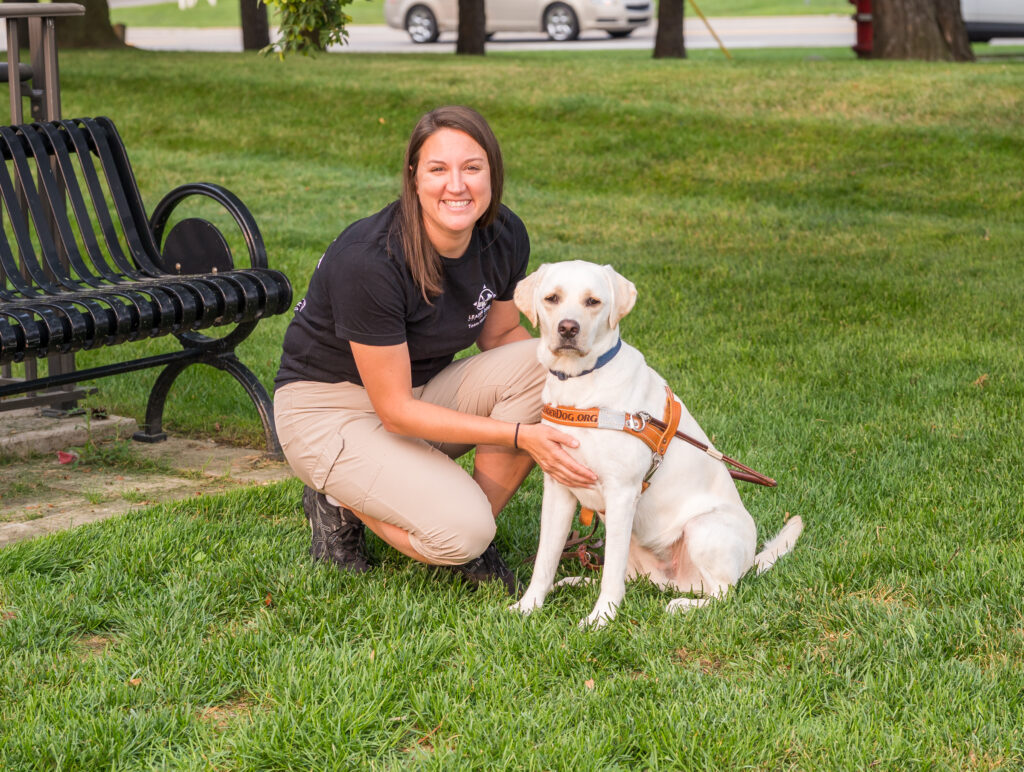
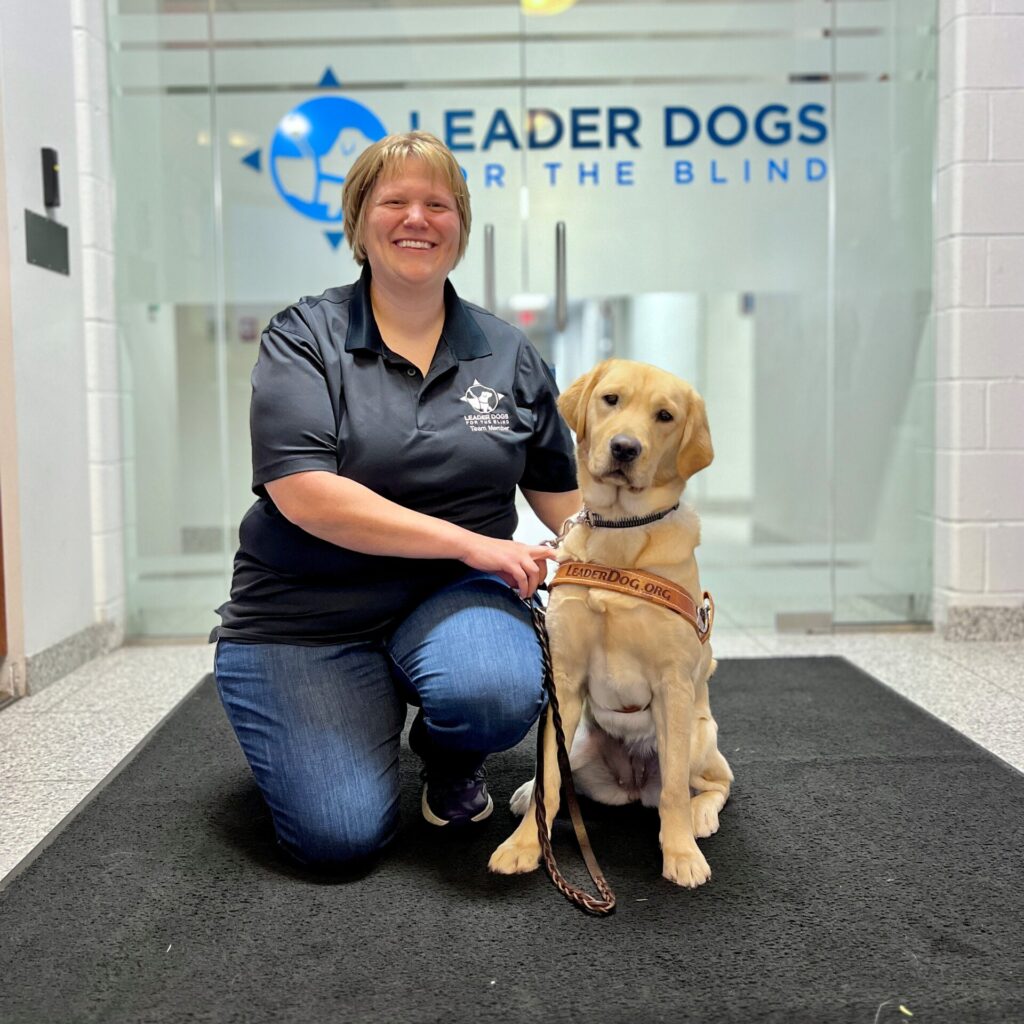
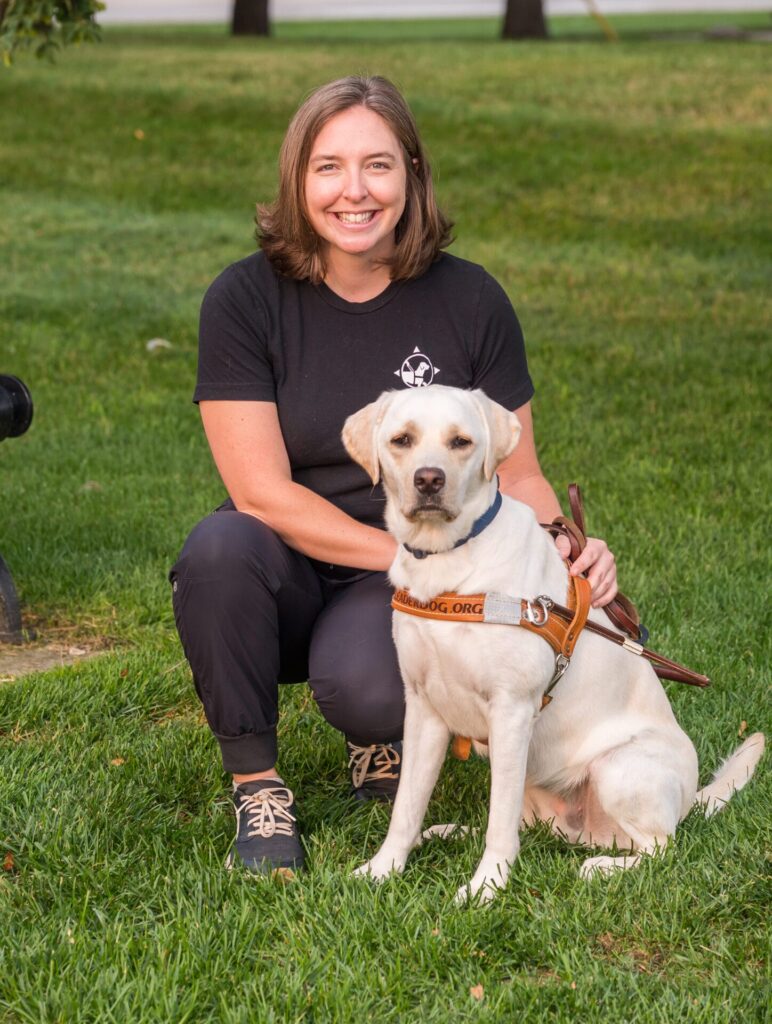
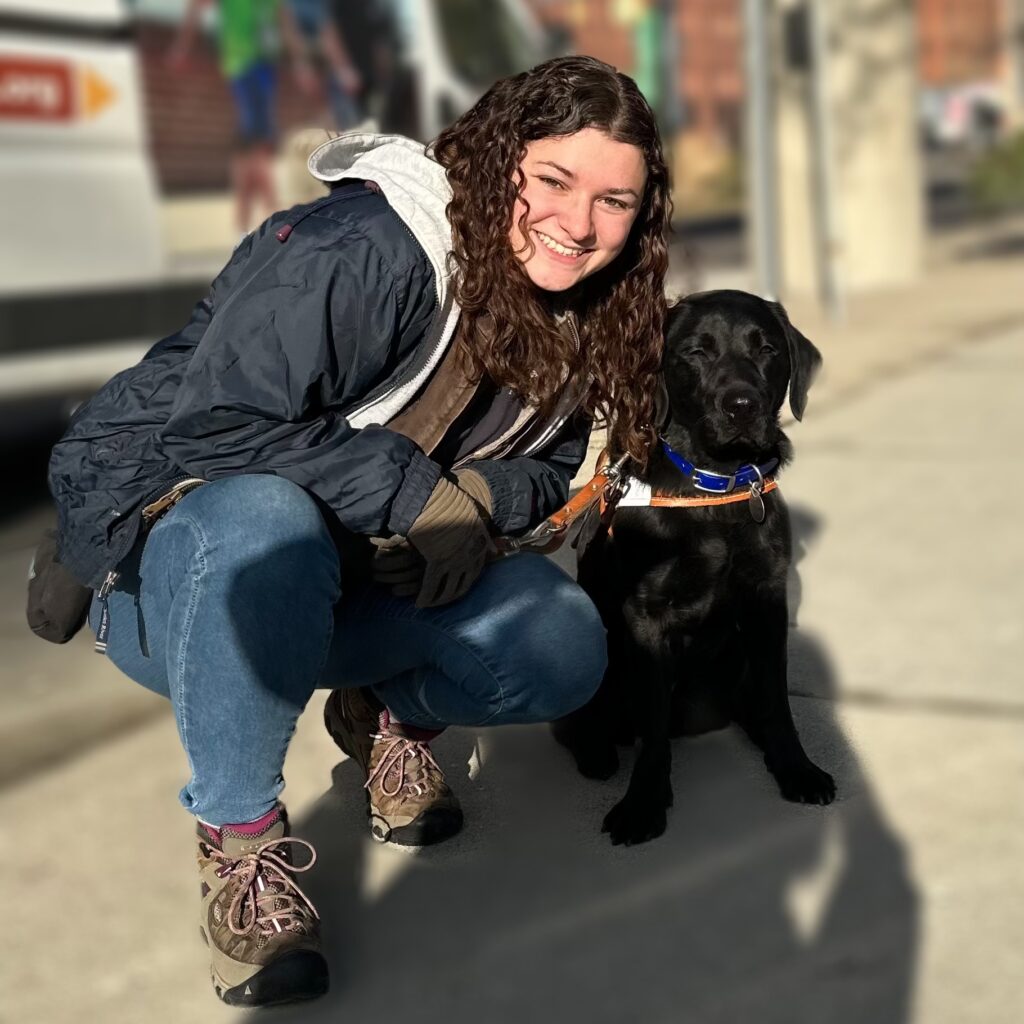
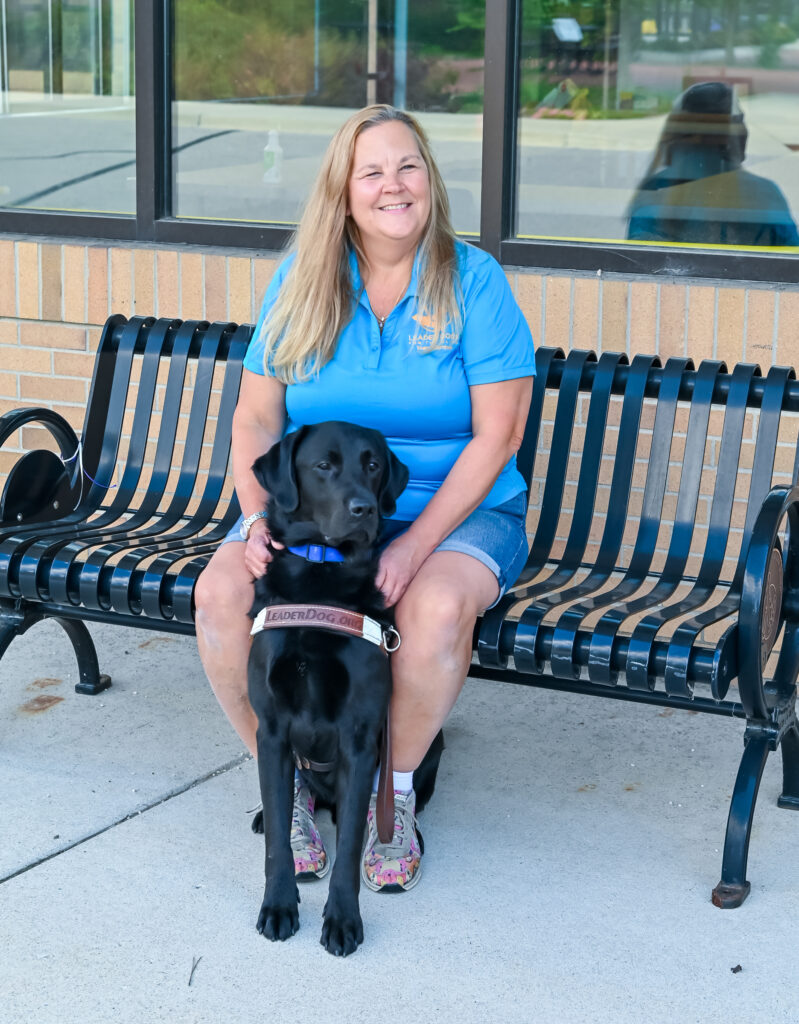
To find out if you’re eligible, visit our Guide Dog qualifications page.
The decision to use a guide dog is a personal one based on needs, goals and lifestyles. Guide dog travel is a collaborative effort, requiring users to possess O&M skills and established daily walking routes to use and support a guide dog effectively.
While a guide dog is a wonderful partner, it doesn’t replace your white cane as a navigational tool. There are times, places and situations where using a white cane supports walking with a guide dog or should be used in place of guide dog travel. To support teamwork, guide dog users decide when it is safe to cross a street and give directions to the guide dog to walk to the places they go. A guide dog’s primary role is to assist with obstacle avoidance, maintain straight line travel and support straight street crossings, as well as target curbs, doors and other learned objects.
Our guide dogs are not trained for medical alert, street crossing decisions, personal protection, or PTSD.
A one-week, one-on-one program teaching safe travel skills with the white cane.
A weeklong program for teens and a supporter to learn safe travel together.

A week-long experience combining outdoor adventure, mobility skills, friendships and leadership development.
Learn the skills for safe, independent travel and lead a life without limits — all at no cost.
Since we receive zero government funding or insurance money, we rely 100% on the generosity of donors like you.
Every day, we rely on the support from our community of volunteers, made up of people just like you who make our mission possible.
Our signature fundraiser will take place at the Palazzo Grande in Shelby Township, MI. Every dollar raised supports life-changing programs at no cost to our clients, empowering people who are blind or low vision to live independent, confident lives.
The evening includes a family style dinner, an open bar, hors d'oeuvres, an ice cream and cannoli platter, an espresso station, and on-location parking.
In our latest Faithful Friends newsletter, we highlight ways we are helping Leader Dog clients — and we invite you to learn how you can make a difference.